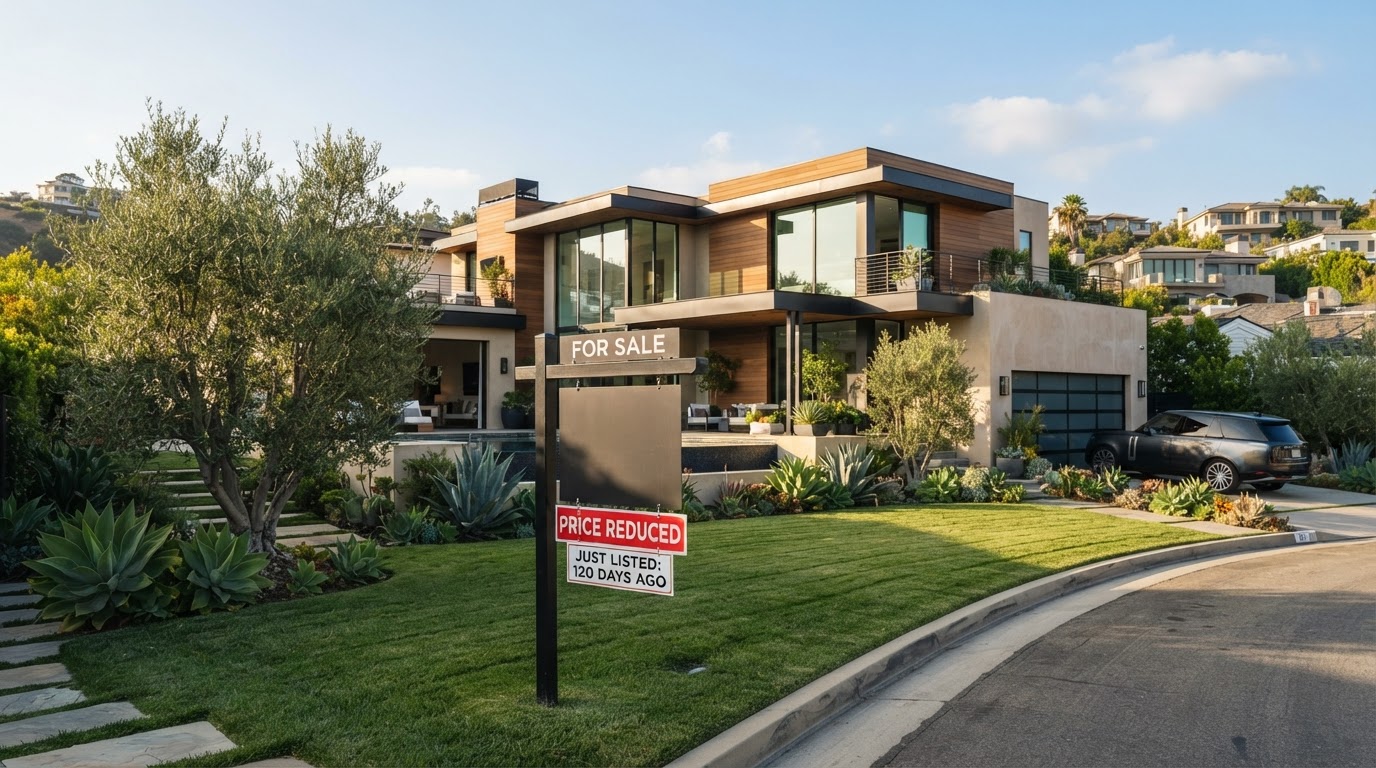
A strategic guide to the five hidden dangers of overpricing your home — from lost buyer exposure and stale listings to weaker negotiating leverage and carrying costs that erode your equity — with a strategic pricing checklist for sellers in the Greater Los Angeles area.
The Hidden Cost of Overpricing
Your Asking Price Is a Marketing Strategy, Not a Statement of Value
Every homeowner wants to achieve the highest possible price when selling. That is entirely reasonable, particularly when your home represents years of investment, improvements, and accumulated equity.
However, one of the most expensive mistakes a seller can make is confusing the price they want with the price the current market will support.
A property's asking price is not necessarily its market value. It is the number used to introduce the home to potential buyers and position it against competing properties.
When that number is strategically selected, it can generate interest, encourage showings, and create opportunities for negotiation.
When it is substantially above what qualified buyers are prepared to pay, the consequences can extend far beyond a longer listing period.
The objective is not to list your property at the highest possible number. It is to create the conditions for achieving the strongest possible sale.
Danger #1: You Lose Valuable Buyer Exposure
The Buyers Most Likely to Purchase Your Home May Never See It
Today's buyers frequently search for properties within specific price ranges, using online platforms, MLS-connected searches, and automated alerts.
A home priced above a buyer's search ceiling may be excluded from their results entirely.
Consider this hypothetical scenario:
| Pricing Strategy | Asking Price | Potential Impact |
|---|---|---|
| Market-supported positioning | $2,450,000 | Appears in searches with maximum prices of $2.5 million |
| Above-market positioning | $2,695,000 | Excluded from those same searches |
| Later price adjustment | $2,475,000 | May reenter the search range after initial market exposure has passed |
The example illustrates a simple but important principle: your asking price determines which buyers encounter your property.
A home priced too high may attract buyers comparing it with superior properties, while missing buyers who would otherwise view it as a compelling option.
This can be especially important in Greater Los Angeles, where property characteristics and values can vary considerably between neighborhoods and even adjacent streets.
Why Initial Exposure Matters
A newly listed property can benefit from heightened attention among buyers actively monitoring the market.
That attention is not guaranteed, and it does not disappear after a set number of days. Nevertheless, an unrealistic initial price can mean missing an important opportunity to engage qualified buyers when the listing first becomes available.
CGRE Insight
Strategic pricing starts by identifying the buyers most likely to purchase your home and understanding the alternatives they are considering. We price with the competitive landscape in mind—not simply the seller's desired number.
Danger #2: Your Listing Can Become Stale
More Time on the Market Can Change Buyer Perception
When a property remains available significantly longer than comparable homes, buyers may begin asking questions.
- Why hasn't it sold?
- Is the asking price unrealistic?
- Are there inspection concerns?
- Is the seller difficult to negotiate with?
These assumptions may be completely unfounded. The property may be in excellent condition, and the only issue may be its pricing.
Nevertheless, prolonged market exposure can influence buyer behavior.
Some buyers postpone visiting the property because they expect a future reduction. Others interpret the extended listing period as an opportunity to negotiate more aggressively.
A longer marketing period is not proof that a property is overpriced. Unique homes, luxury properties, seasonal conditions, and limited buyer pools can naturally require more time.
The relevant question is whether your home's performance is consistent with comparable properties competing for the same buyers.
When Overpricing Weakens Your Position
Danger #3: You May Ultimately Sell for Less
The High-Price-First Strategy Can Backfire
Some sellers believe the safest approach is to start high because they can always lower the price later.
Although price adjustments are a normal part of real estate marketing, this approach can carry a financial cost.
A property initially priced beyond market expectations may generate limited showings, receive few offers, and require one or more reductions before buyers begin responding.
By that point, the listing may have accumulated enough market time to invite more aggressive negotiations.
Consider two hypothetical selling scenarios:
| Strategy A | Strategy B | |
|---|---|---|
| Initial Asking Price | $2,850,000 | $2,495,000 |
| Final Sale Price | $2,375,000 | $2,530,000 |
| Difference in Final Sale Price | $155,000 | |
In this illustration, the home with the lower initial asking price ultimately achieves a higher sale price.
These are hypothetical outcomes, not predicted results. The example demonstrates why the highest initial asking price does not necessarily produce the highest final sale price.
A well-positioned listing may encourage multiple qualified buyers to participate. Competitive interest can strengthen a seller's negotiating position, although multiple offers and above-asking sales are never guaranteed.
Danger #4: You Lose Negotiating Leverage
Buyers Respond to the Property's Market History
The strongest negotiations generally begin when a property has credible market positioning and meaningful buyer interest.
Overpricing can weaken that position in several ways.
Fewer Qualified Offers
When fewer buyers are willing to engage, the seller may have fewer alternatives during negotiations.
Greater Pressure to Concede
A buyer may seek a lower purchase price, closing-cost credit, repair allowance, or more favorable contingencies.
A More Difficult Appraisal
Even if a buyer agrees to an elevated purchase price, a lender's appraisal may not support the contract amount.
Reduced Flexibility
A seller who has already purchased another property, relocated, or committed to a financial deadline may face increasing pressure as the listing remains unsold.
Depending on the financing and contractual terms, an appraisal shortfall may require renegotiation, additional buyer funds, or other resolution.
The Difference Between Asking Price and Negotiating Strength
A high asking price can create the appearance of a strong position without providing actual leverage.
Real negotiating strength comes from qualified buyer interest, favorable contractual terms, credible market evidence, and the seller's ability to evaluate alternatives.
CGRE Insight
Masterful negotiation begins before the first offer arrives. Pricing, presentation, market exposure, and buyer qualification all contribute to the leverage available when negotiations begin.
The Financial Impact and Smarter Strategy
Danger #5: Holding Costs Can Erode Your Equity
Every Additional Month Has a Potential Cost
When a property takes longer to sell, the seller may continue paying expenses that would otherwise have ended or changed following closing.
These can include:
- Mortgage interest.
- Property taxes.
- Homeowners insurance.
- Utilities and maintenance.
- Landscaping and pool service.
- HOA dues, where applicable.
- Security, vacancy management, or additional property-related expenses.
For sellers who have already moved or purchased another home, these expenses can become particularly significant.
Illustrative Cost of an Extended Listing Period
| Monthly Expense | Estimated Cost |
|---|---|
| Mortgage Interest | $5,200 |
| Property Taxes | $1,800 |
| Insurance | $450 |
| Utilities & Maintenance | $650 |
| Total Monthly Carrying Cost | $8,100 |
| Additional Three Months | $24,300 |
Hypothetical illustration. Actual carrying costs vary. Mortgage principal payments are excluded because they generally reduce the loan balance rather than represent the same type of expense as interest.
This $24,300 does not include a potential reduction in sale price, additional preparation expenses, or the financial consequences of delaying a replacement purchase.
The true cost of overpricing is not simply the eventual price reduction. It is the combined effect on time, expenses, leverage, and net proceeds.
How to Price Your Home Strategically
A successful pricing strategy should be grounded in evidence, not assumptions.
1. Study the Right Comparable Sales
Review recently closed transactions involving properties with relevant similarities in location, size, condition, lot characteristics, and amenities.
A nearby sale is not automatically a comparable sale.
2. Evaluate Current Competition
Understand what buyers can purchase today at competing price points.
Active listings reveal your competition, while pending transactions and recent closings provide additional evidence of buyer behavior.
3. Analyze Local Market Conditions
Consider inventory, absorption, days on market, recent price adjustments, and the relationship between original asking prices and final sale prices.
A pricing strategy that works in Sherman Oaks may not be appropriate for Beverly Hills, Westwood, or Santa Monica.
4. Account for the Property's Unique Features
Architecture, privacy, views, lot utility, permitted improvements, condition, and location can materially influence marketability.
However, the cost of an improvement does not necessarily equal the value buyers will assign to it.
5. Monitor Buyer Response and Adjust Intelligently
Once listed, evaluate showing activity, qualified buyer feedback, competing listings, and offers.
A price adjustment should be based on meaningful evidence rather than an arbitrary deadline.
The objective is to respond strategically before unnecessary market time and expenses accumulate.
Your Pre-Listing Pricing Checklist
- 1Obtain a detailed comparative market analysis.
- 2Review relevant sold, pending, and active listings.
- 3Understand competing properties in your price range.
- 4Identify your home's strongest selling features.
- 5Evaluate condition and preparation recommendations.
- 6Review local inventory and buyer demand.
- 7Discuss realistic pricing scenarios and expected net proceeds.
- 8Establish a marketing and performance-review strategy.
- 9Select a broker with proven local knowledge and negotiation expertise.
The CGRE Difference
Strategic Pricing. Masterful Negotiation. Stronger Market Positioning.
At Chana Gedy Real Estate, we believe pricing should be intentional, evidence-based, and tailored to each property's competitive position.
Through The Gold Glove Concierge Real Estate Service®, Chana brings more than 18 years of real estate experience, extensive local connections, and direct, hands-on representation to every listing.
We Don't Simply Recommend a Number. We Develop a Strategy.
Our approach combines detailed market analysis, property-specific positioning, an understanding of buyer behavior, and a comprehensive plan for presenting your home.
We Protect Your Negotiating Position.
As a master negotiator, Chana evaluates more than the purchase price. Buyer qualifications, financing, contingencies, concessions, and closing terms all influence the strength of an offer.
We Stay Directly Involved.
From preparation and property access to showings, buyer feedback, and negotiations, Chana maintains a boots-on-the-ground presence throughout the selling process.
Our boutique approach is built on quality over quantity, with personalized attention and strategic problem-solving at every stage.
Ready to Discover What Your Home Is Really Worth?
Before choosing an asking price, understand your property's market position, competitive advantages, and potential net proceeds.
Schedule a Personalized Home Value & Pricing Consultation.
Chana Gedy, Real Estate Broker
Chana Gedy Real Estate (CGRE)
The Gold Glove Concierge Real Estate Service®
DRE #: 02031085
Cell: 310-499-6249
Chana Gedy | Real Estate Broker
DRE #02031085
310-499-6249
www.chanagedy.com | MeetChana.com
The Gold Glove Concierge Real Estate Service®
Quality Over Quantity. Built on Integrity, Backed by Results.
Disclaimer
This guide is for general educational purposes and does not constitute legal, tax, financial, or appraisal advice. Market conditions, property characteristics, and transaction results vary. Financial examples are hypothetical and do not represent guaranteed sale prices, market performance, or proceeds.
© 2026 Chana Gedy Real Estate. All rights reserved.
Your Sale Deserves a Strategic, Personalized Approach
At Chana Gedy Real Estate, we understand that selling a home is more than a transaction. It's a decision that affects your equity, your timeline, and your next chapter. Through The Gold Glove Concierge Real Estate Service®, Chana provides market knowledge, strategic marketing, skilled negotiation, and hands-on transaction coordination for sellers throughout the Greater Los Angeles area.
Schedule Your Personalized Seller ConsultationThe Gold Glove Concierge Real Estate Service®